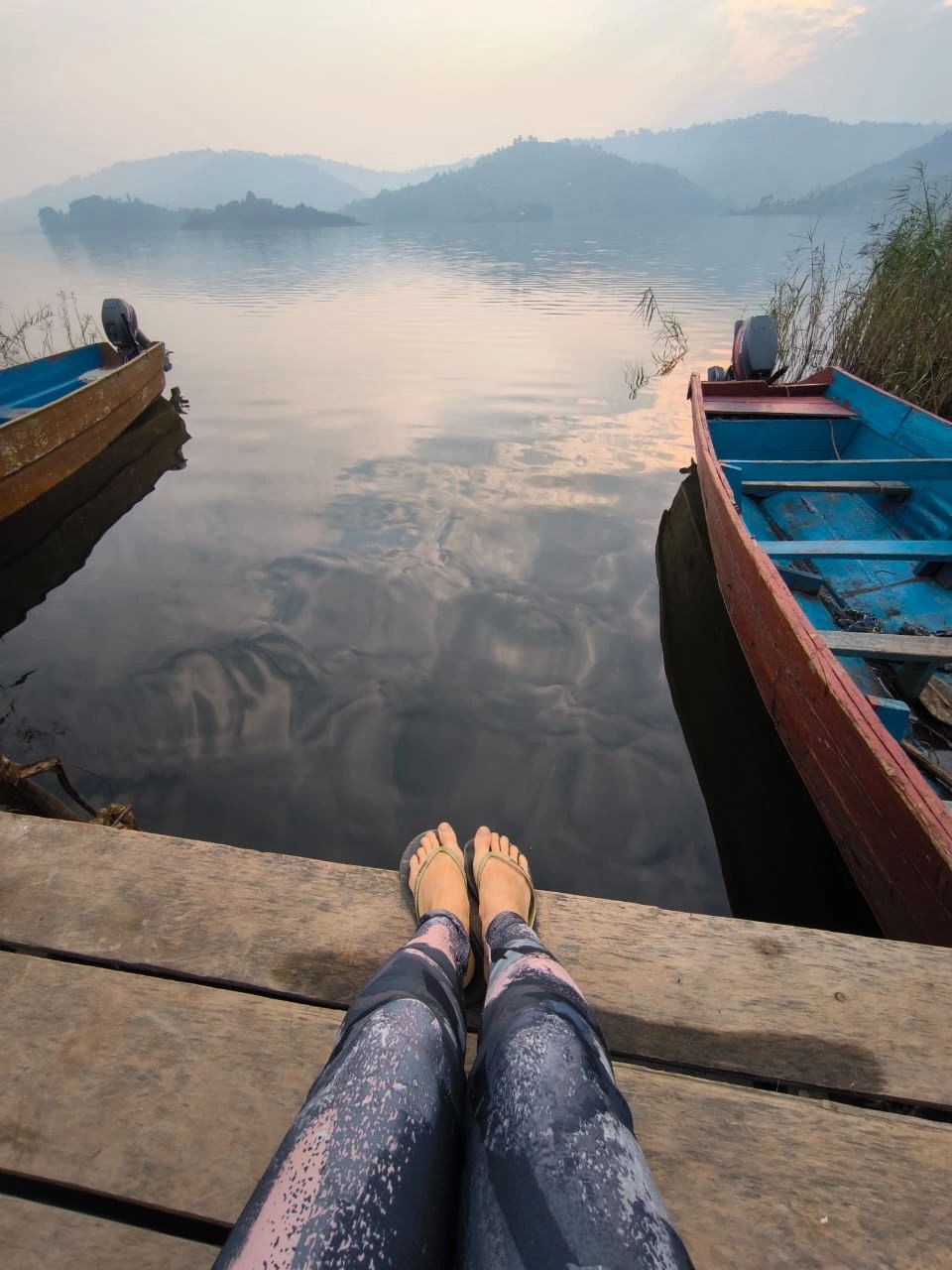
(From my latest travel memoir based on the journey around the world.)
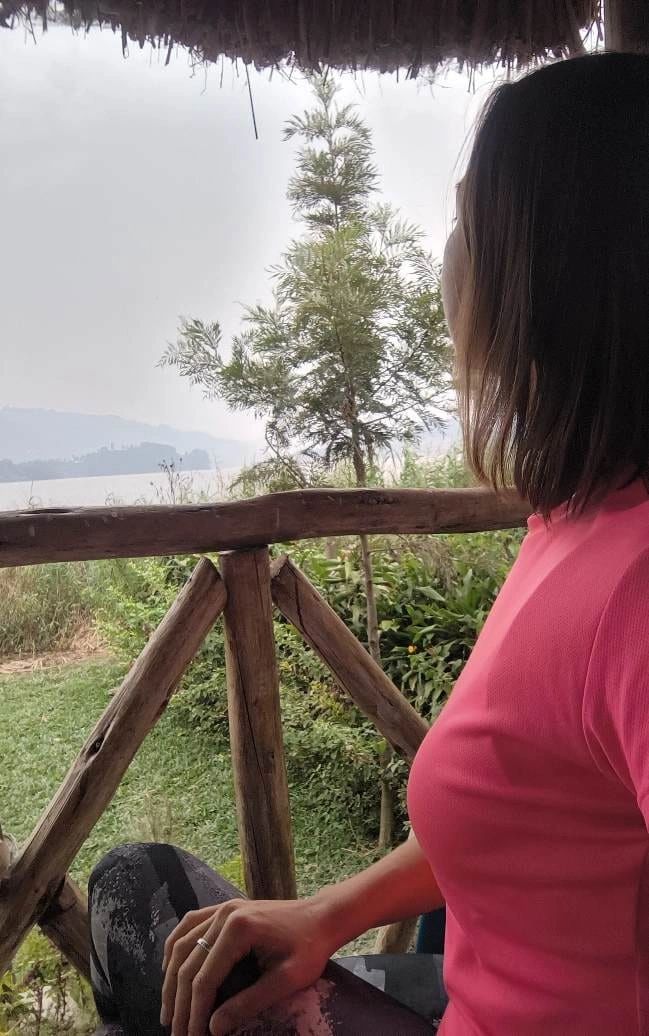
By the time I reached Uganda, I had already been traveling the world for nearly six months – six months of border crossings, new faces, and the quiet rhythm of motion that had become my normal.
My journey had started across the oceans – in the Americas, where I wandered through South, Central, and North America, losing and finding myself in the vastness of it all. From the penguins and Patagonia in Chile to the red rocks of the American Southwest, from island sunrises in the Caribbean to echoes of the Maya in Guatemala – each place had left its fingerprint on me.
Africa was the next chapter.
A whole new continent, a new story.
So far, I had passed through Tunisia, Kenya, and Rwanda – each revealing a different face of this vast land. Tunisia reminded me of the Mediterranean warmth of Greece or Egypt, where the desert met the sea and time moved unhurriedly. In Kenya, I was still cushioned by the structure of planned safaris and organized tours. In Rwanda, I found kindness – a friend who welcomed me into his home, a few days of laughter and shared meals that felt like belonging.
But Uganda was different. Uganda was mine. I was stepping into a country where I knew no one personally, and no one had organized a trip for me. Through Couchsurfing, I had found a local family willing to host me for a couple of days. That was all I knew I would be doing once I crossed the border.
I remember that morning so vividly. The light was soft, the air cool, and yet my chest buzzed with unease. Not fear exactly – I had crossed dozens of borders by then – but something quieter, something instinctual. The kind of feeling that doesn’t announce danger but whispers: pay attention.
A motorbike was waiting to take me across the border. My life was packed into a suitcase, a carry-on, a small backpack, and one extra bag I kept promising myself to throw away. The driver balanced it all as if defying gravity. On the Ugandan side, another motorbike was waiting – this time, there were three of us, plus my luggage. Somehow, impossibly, we fit.
I laughed, wind whipping through my hair, dust painting my skin, the absurdity of it all sinking in. The road stretched out before me – rough, alive, beautiful – and I remember thinking: this is what freedom feels like.
I was supposed to go to Lake Bunyonyi, a place I’d read about – a quiet lake wrapped in green hills and dotted with tiny islands. This was where the hosts were willing to take me in. A few days of stillness, I thought. A few days to rest before continuing my African adventure.
But life had other plans.
It always does when you start to think you’re in control.
The bus to Kabale, the place from where I would take a boat to go to my hosts, was small – one of those battered minivans that have carried half of Africa across its mountains. There were twice as many passengers as there were seats. Luggage piled on the roof. A chicken somewhere behind me. The smell of dust and heat.
I was the only Muzungu, the white foreigner, and every time I caught someone’s eye, they smiled. A quiet acknowledgment, a kind of unspoken curiosity.
The man beside me said he was heading to a friend’s wedding. He was cheerful, chatty, offering roasted corn through the window when we stopped by the roadside vendors. Our driver, too, was eating corn, one hand on the wheel, the other on his snack. The road wound through the lush green mountains of southwestern Uganda, climbing higher, curling tighter.
And then, in one moment, everything changed.
A cow stepped onto the road – slow, unconcerned, almost graceful. The driver didn’t swerve left or right; he went hard to the right immediately, trying to avoid the animal. But a truck was barreling out of a corner, cutting us off. There was no time, no scream – it all happened too fast for anyone to react. The van left the road and slid into a ditch, tipping onto its right side.
It wasn’t upside down, but the world still felt scrambled. Dust filled the air, the van groaned, and everything smelled of earth and metal. My face burned. My nose was bleeding – fast, hot, uncontrollable. When I touched it, I felt something shift under my fingers, the shape wrong, unfamiliar.
My first thought wasn’t pain. It was fire. Get out before it catches fire.
I crawled out of the van, trembling, blood dripping down my chin, onto my clothes, my bag. People were climbing out one by one, dazed but alive. The driver was shouting at the woman with the cows. She kept saying softly to me, “Sorry, sister… sorry.”
I stood on the roadside, flagging down cars with blood still on my hands. One stopped. The driver looked at me with wide eyes and said simply, “Hospital.”
Kabale wasn’t far. My host, Tuta, was already waiting for me there – a young man I’d only messaged with online, now suddenly my lifeline. He took me to the hospital and stayed by my side while the doctor examined me.
The X-ray machine hummed quietly. The doctor squinted at the image and smiled. “Hakuna Matata,” he said. No broken bones. Just swelling. Rest.
I wanted to believe him. But when I saw my reflection – my nose swollen, my face slowly so pale – I wasn’t so sure.
Still, I was alive. My limbs were intact. I could breathe. That was enough.
We took a small boat across Lake Bunyonyi to reach Tuta’s home.
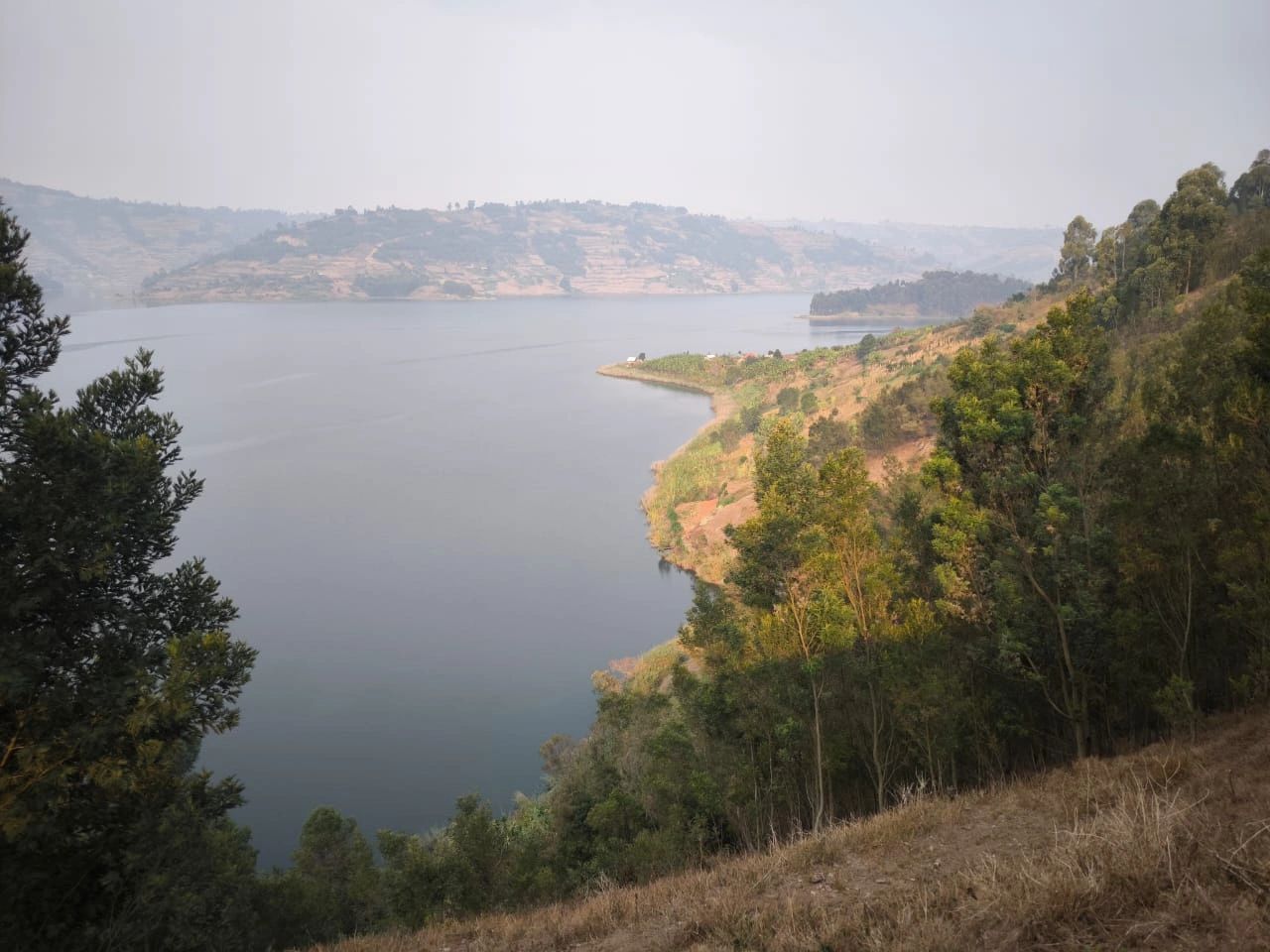
The lake was breathtaking – glassy water framed by emerald hills, tiny islands floating like forgotten dreams. As the boat cut through the water, I felt the weight of what had happened begin to settle. Not fear, not even pain – just the realization that life had brushed close, and then mercifully stepped aside.
Tuta’s family welcomed me as if I were one of their own. They gave me a small wooden cabin by the lake, a quiet refuge surrounded by banana trees and birdsong. Next to the cabin stood a half-built structure – a community library, Tuta’s dream project.
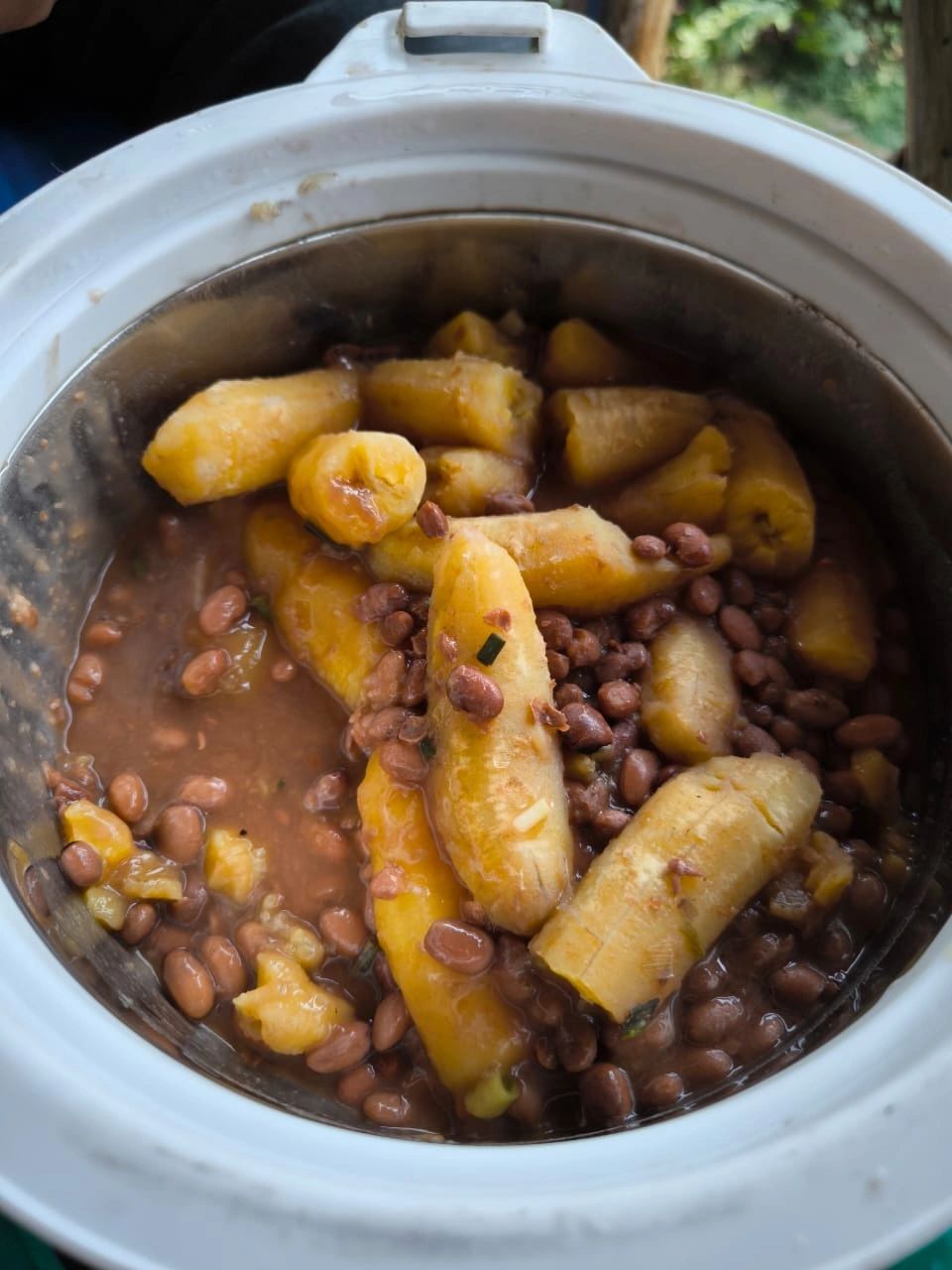
In the evenings, his mother would bring dinner – simple, beautiful meals of rice, beans, and sweet bananas. They didn’t have much, but they had peace. And somehow, that peace began to heal me.
Every morning, the routine was always the same. The first thing I did was touch my nose, testing to see if it had started to heal, before glancing into the small mirror to check the status of my bruises. The dark marks under my eyes spread at first like shadows – “glasses-shaped,” I joked to myself – a mix of purple and pink that almost matched my usual outfit. I knew it would take a while for them to fade.
.jpeg/:/cr=t:0%25,l:0%25,w:100%25,h:100%25/rs=w:1280 "Besides the son, the family had two girls.")
During the day, I helped wash dishes, watched the boys lay bricks for the library, taught a few English words to the younger girls. I learned how little one really needs to feel safe.
After a few days, when I could finally laugh without wincing, I took another boat with Tuta to Kabale. The rain caught us on the way, sudden and loud, but even that felt cleansing. I bought medicine for the bruises, a few fruits, and corn.
That night we made a bonfire by the lake. The flames danced, the stars came out, and I thought of the accident again – how one small curve in the road could have changed everything.
The next day we visited a nearby village, where I met a man named Bitalo, a radio host with a love for reggae and a smile that could light up a room. His home was filled with music and laughter, the air thick with the scent of beans and smoke. I ate the local food, ignoring my hosts’ worried looks. My stomach didn’t protest. It never really did – maybe because I had learned to trust the world, and in return, it trusted me back.
But soon, it was time to go.
Before the accident, I had planned to travel deeper into Uganda, then continue south to Zambia. Now, I knew that plan was gone. The idea of another crowded bus made my body tighten with fear. I decided to take an easier route – back to Kigali, Rwanda’s capital, then fly to Lusaka.
Friends back home told me to return, to stop, to be safe.
My partner in Malaysia was also concerned.
But I knew I couldn’t end my journey there.
Yes, I was bruised. Yes, my face looked like it had survived some type of abuse. But my spirit – that part of me that had set off around the world in the first place – was still intact. Maybe even stronger.
When I finally boarded that minivan out of Kabale, I felt both fragile and unbreakable. The lake shimmered behind me. The library stood waiting for its first books. And I thought, maybe this was exactly how it was meant to be – not a perfect journey, but a real one.
Because sometimes, the road bends.
Sometimes it throws you into a ditch.
And sometimes, it just needs to remind you how precious it is to be alive.
Looking back, I don’t think the accident was random. Maybe it happened to slow me down – to make me listen, to make me see. Maybe it happened to lead me to that lake, to that family, to that moment of stillness that I didn’t know I needed.
When I finally reached Zambia, I carried more than a suitcase and a story.
I carried perspective.
And maybe that’s what travel really is – not a race across continents, but a long, winding lesson in courage, humility, and grace.